
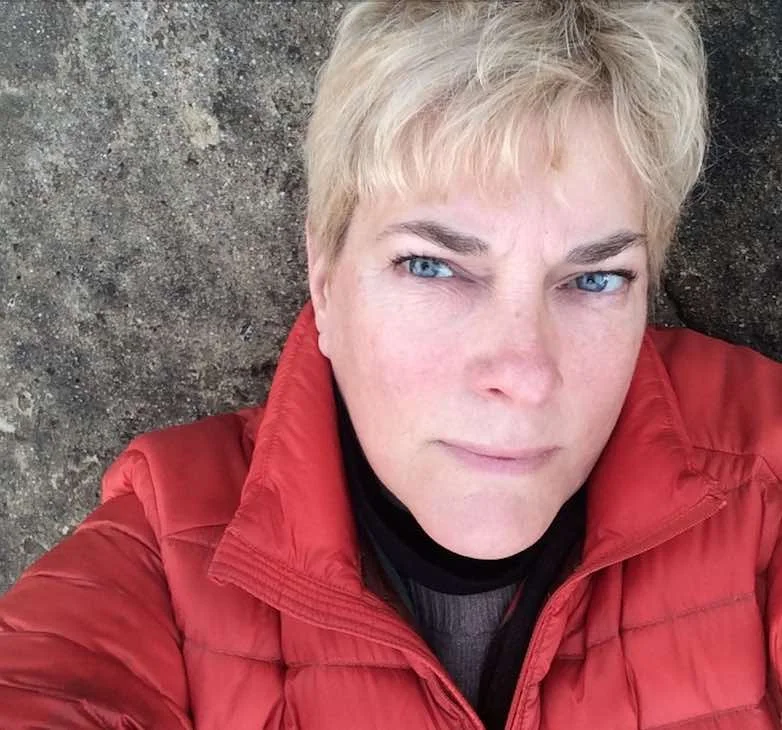
Born in Montreal in 1960, Bex Brian divides her time between New York and Quebec. Promiscuous Unbound is her first novel– she's about to release a new novel, Radius.
Bex E Brian shared what she's been creating in the kitchen during quarantine as well as her newest novel, Radius.
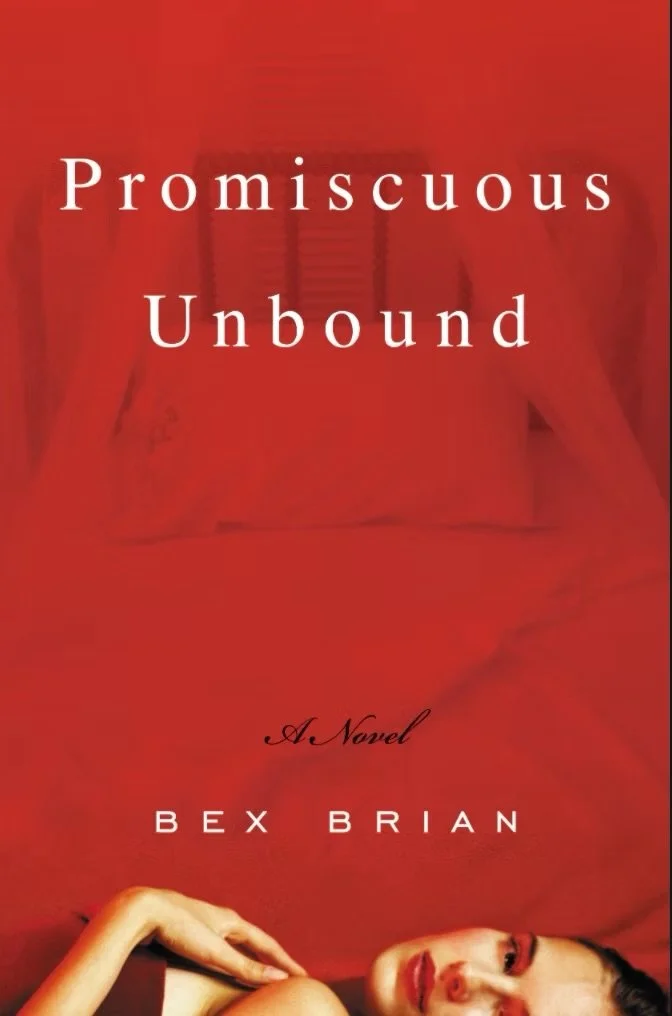
Marjorie Martay: We're talking today to Bex E Brian who is currently living in Middletown, Connecticut on the lovely campus of Wesleyan. We're so delighted to be talking to you Bex. I was very interested in doing a conversation with you because of your unique background and what I liked so much is the fact that you are a writer, a food writer in particular, and you very much like to cook. But in addition to that, you're also a novelist and you produced a book a number of years ago called "Promiscuous Unbound" and now you're about to publish a book called "Radius" by Spuyten Duyvil Press, which we would love you to talk about. So Bex, why don't you first talk to me a little about how did you get into, we will start with the cooking part first– How did you know that you love to cook? What was that about for you? I remember reading something about the fact that when your parents got divorced that that was sort of an impetus for you to start shopping and start doing meals in your home for your dad. Why don't you talk to me a little about that?
Bex E Brian: Okay. Well it's exactly that. When my parents divorced my mother, this was in Montreal during the 70s, and my mother was a professional woman, one of the few ones among my friends' parents. She was a broadcaster on TVC. She had a column in the Montreal Gazette. She had a Sunday morning TV show, sort of like a Today Show, but local. I was 12 and I had a much younger sister who was eight years younger than me. Mummy wasn't around, so it was really sort of do or die. At first my meals were, as you could imagine, rather elementary, you know, steak, some chicken. And then I sort of realized that the kitchen was a true refuge for me. When I went in there and opened the fridge and contemplated what I wanted to make, all the tumult of that time and the confusing nature of your parents divorcing at that age. It's a bit rough. And this was certainly before anything like blended families and talking to the children about what happened and our feelings, our response to the divorce was certainly never taken into consideration. So I guess the kitchen, when I walked in, it was like the ultimate refuge and I could control something. I could go in there, pull out a steak, pull out some chops, and I could make a meal. So it was, it just absolutely became my favorite room in the house and still is by far–as it is for many.
M.M.: That's really interesting. Do you do a lot of dinner parties too? Or do you just cook now for your husband at home?
B.E.B.: Ah I used to, I used to do a lot of dinner parties. We recently were living in Abu Dhabi for five or six years. My husband has a job teaching at NYU Abu Dhabi. He teaches in the creative writing department. Because of the nature of the place where, only hotels serve wine or beer or hard spirits, you actually want to congregate in your own home because it's a lot freer and it's a hell of a lot less expensive. And, we all know hotel food is terrible. I mean, especially in Abu Dhabi where we have a joke, there's just one kitchen in the center of the city and they just send the food out to various hotels. So yeah, so I did then. When I was younger, I did throw a lot of parties. Now, you know, we sort of had become, well, now nobody's throwing dinner parties. We're all down to the two of us, or however many members of the family there is.
M.M.: So how is this health crisis affecting you in terms of your creativity? Like what you're cooking in the kitchen?
B.E.B.: Yeah, it's funny, because we have joked, our lives were pretty much the same before and after. I'm working in the morning, we take a walk with the dog. I come home. I cook dinner. The only difference now is, you go in the market, you're terrified. You're putting a mask on, gloves on. But I must say that because we're so isolated here, we had a long discussion about whether to leave New York at all, but ultimately we chose to because my husband has a heart condition and it just seemed crazy to risk anything, you know? But I loathed to give up my, my kitchen and all my pots and pans, my Cuisineart, my mandolin, everything, all the stuff I use and now basically down to a knife and a can opener here. So things have gotten really small. But having said that, my meals are getting more and more elaborate. I've treating this almost like an exercise. Like, Oh my God, I have a can opener. What can I do?
M.M.: How wonderful to hear– so you're finding it very creative and something that is in a sense expanding?
B.E.B.: Yeah. I'm really putting a lot of effort and what I am doing because especially up here, which we were a little stunned to see you know, a lot of restaurants are doing carry out or delivery, but every single Asian restaurant has closed for good. I think people were just misplaced in their fears, but fears nonetheless. And so there's no sushi to be had. Chinese food to be had. There's no Thai food to be had. There's nothing Asian. So I'm serving more of that– making big Chinese meals. Last night I made a big Indian feast. The night before that I made a big Mexican piece, so I'm sort of thematically moving around the world and cooking, you know, that way.
M.M.: That's wonderful, Bex, that is just so uplifting for everybody to hear that it's been very expanding for you and very, very creative. Then also interesting enough multicultural too.
B.E.B.: Yeah. Well my husband was a writer for the New York Times Magazine for umpteen years and was often on assignment and the brat that I am, I would often ask if I could come along. So we have traveled a lot. I was thinking about this today because obviously I was thinking about this interview and my first thought was coming into the kitchen for me is a little bit like a history. And then I thought, no, no, no, that's entirely wrong. What coming into the kitchen for me is I sort of want to be stripped of history. I want to just see what new thing I can find welcoming. I want to go beyond. When I grew up, it was beans on toast, pretty much every night. My palate has grown in leaps and bounds. I see a jar of peppers, I buy them and I say, well, how am I going to figure this out? You know, and what am I gonna do with this? So it's sort of my own little world of exploration.
M.M.: That's wonderful. I think that's very inspirational for people to hear as well. How has that affected your writing in terms of you had done that previous novel, now you're bringing out a second one. Are you thinking about taking this experience and writing more about it? I'm interested, as we go through this, how is this affecting you in terms of your actual writing and has it expanded on that level for you is what I want to know. It sounds like in the kitchen you have been very creative. So can you see a correlation between that creativity then going into your own work?
B.E.B.: Well what I can see, I think is that one of the reasons I like to travel and it's certainly one of the reasons why I like to write and usually what I write about is like the moment that is absolutely the most vivid. Obviously you have to put something in a page, it's not just a dull little exchange between people. Everything is sort of laser focused and hyper-realized, right? Because you want to make it entertaining and true. I think one of the things I think a lot of people are gonna feel about this time, although right now it seems a little claustrophobic and the days might seem a little one toned. But ultimately, we're all going to remember this moment. This is going to be in everybody's mind. This is absolutely the most vivid thing that has happened to everyone who is alive right now– it's not even a generational thing. So I think that moment in time being vivid. I'm trying to make my cooking vivid, my writing vivid. Everything feels a little wrapped up and sort of incredibly important– like don't waste time. I certainly have that feeling going forward in this crisis.
M.M.: I was reading some of your wonderful articles that you did, for example, for Salon.com and you have a sense of humor about how you approach things, which I loved by the way in terms of your writing. I thought wouldn't that be great to take some of that talent that you have and maybe do a couple of articles or a series of articles on your experiences now.
B.E.B.: Yeah, no, I'm keeping my eye and ear out because I think a lot of people are gonna start creating smaller blogs. I think everybody needs and wants to mark this time, mark this moment– whether it's pictorially or with words or impressions. It's not something we can just let lie. It's not something that's happening outside ourselves. It is happening to all of us. That is just the weirdest thing. To think about it, the world is having one conversation, the whole world and it's mind blowing to me.
Anyways, I'd love to do some writing for you. The constraints of my current writing for "Eat Darling Eat" is you're cooking with your mother, and my mother, she was an extraordinary woman, critically difficult but extraordinary woman. But that does narrow things down and there are so many other areas I'd like to explore about this time.
M.M.: Well, my mandate is all about advocating for amazing, creative women like yourself and how are we dealing with all of this. So it would be a terrific thing to revisit you with a wonderful short story or column that you do for us.
B.E.B.: Yeah, that'd be fun. I love a project and things tend to percolate in my head and then they come and I write them rather quickly.
M.M.; Tell me about this new book that you're coming out with.
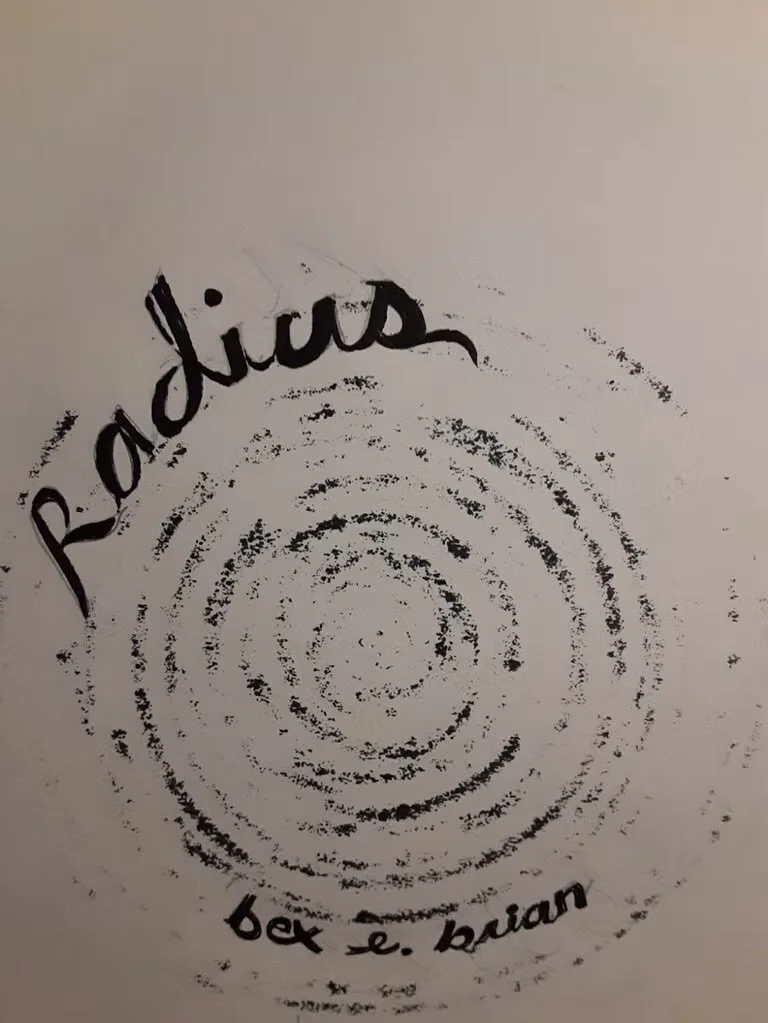
B.E.B.: It's called "Radius" and it's not a true story, but it is based on something that actually happened. It's a little complicated. I'll try and say quickly: my mother had a best friend, this lovely woman who was the fashion editor of the Montreal Gazette and she adopted two children from somewhere in Canada back in the 1960s and one grew up to be about as beautiful as you could imagine– think Naomi Campbell beautiful sort of other worldly beautiful. And one was just a very sweet girl. The very beautiful girl was best friends with my sister but she was always a bit peculiar. You know, if my sister had a boyfriend, she'd swoop in and steal him, or my sister had a blouse, she had to take it off my sister's back and wear it. She was so possessive and slightly crazy. Very beautiful though. So everybody forgave her. Anyway, one day she came home and asked her younger sister for her car keys and her oldest sister said, no, you can't have them. She took an ax and chopped her sister's head off and stuffed her behind the couch. Then when her father came home and said, where's Maggie? Casey attacked him and nearly severed his arm. So that's the basis of the story. But I have transposed it because when I was growing up, which was quite unusual in the 1960s, both my parents married many times so I had many half siblings. So I took that family and made them my half sisters or adopted sisters. So the murder happens within the framework of my family. So it's a tale of that– but thinking back on it 40 years later from Abu Dhabi, so she's in the middle East, and so something happens that changes her whole perspective on what happened 40 years ago.
M.M.: I can't wait. So when did it actually come out?
B.E.B.: Well, everything's up in the air now. We were getting blurbs, I was writing my bio, I'm getting photos and nobody wants to bring a book out now, so I don't know. I don't know when it's going to come out. I'm hoping now maybe even wait until September.
M.M.: Well, I wish you a lot of luck with this and I very much look forward to some of your thoughts about how this health crisis is affecting you and see your great writing style.
B.E.B.: That sounds like something I would be very honored to do and have a lot of fun doing. Good. Well, I look forward to that back. Thank you so much.
"Virus"– an essay by Bex E Brian
My father was terribly British. Not high born, but definitely of that class where information was imparted with a droll sense of humour and a puckish grin. You never quite knew whether to believe what he was saying. But doubting him seemed impossible. The day he told me that there were millions of microscopic bugs living in my eyelashes, I felt particularly torn. Why would a loving father lie to a five-year-old about such a terrifying thing? It had to be true. It was then that I suddenly felt the hordes of bugs on my eyelashes. Panicking, I started running from room to room, as if you can outrun such a thing.
My father, never patient with displays of hysteria, swooped me up as I went haring past.
“Stop being such a bloody fool,” he said, plunking me back down on the chair opposite. “Your eyelashes are nothing. Microscopic little buggers. Nothing compared to the beasts that live in your gut. We are,” and here came that puckish grin, “you, me, your mother mostly made up of bugs. Not like earthworms, though little ones live in you too, not like spiders but tiny, tiny, bugs with no eyes, though some, I believe, do have teeth…”
I don’t know what happened next. My brain probably went into survival mode and shut down.
By the time I was ten, I was the one doling out the mind-blowing facts and figures about the unseen who reside in our bodies. This being the sixties, I was roundly vilified.
Where are those doubters today?
Now, we can’t fall in love, commit murder, make money, lose money, lean toward obesity, or be a skinny as a rail, feel wonderfully good, or suicidally bad, write a gripping book or an unreadable piece of crap without turning to our microbiome, the presumptive source for all the wonders and the woes.
This brings me to another seminal moment in my education about who and what we are. I was in bed with my husband, before I begin, you should know that he has this incredibly annoying habit of saying the most interesting things of the day as I am being dragged into sleep.
On this night, he had just come back from covering an astrobiology conference. I had rolled over, plumped my pillow, moved the dog, so she wasn’t creating a heat force on my feet, when Charles said, “The Vatican Astronomer is investigating the possibility that all life on earth began with a comet carrying a virus that smashed into Australia.”
Charles might not have said Australia, this conversation happened over twenty years ago. However, having been to the great continent down under where life from the macro to the micro is otherworldly, it makes sense to me that the comet would have hit there, knowing perfectly well that there didn’t exist all those billions of years ago.
Naturally, I had to pull myself back from the brink of oblivion and ask the obvious question. “If the Vatican Astronomer believes life on earth began with a comet, how the hell does he jive the Adam and Eve story, hell, any story in the bible?”
In the dark, I felt Charles shrug. “Faith is one thing. Facts are another.”
I guess. Still.
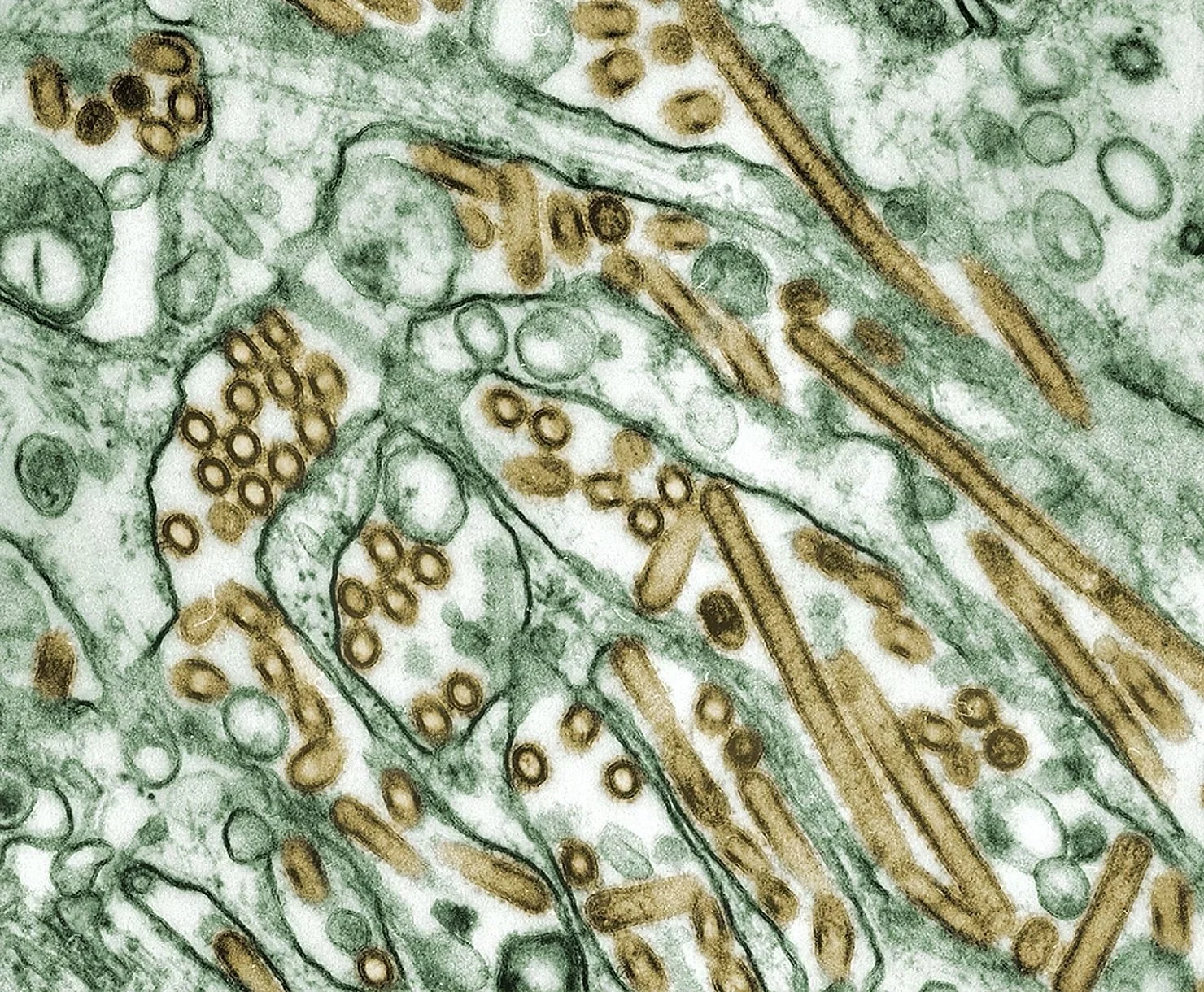
This wasn’t the only virus bombshell that Charles dragged home. It must have been ten or twelve years after the astrobiology conference, while we were living in London, a city with its own storied history of virus’ wreaking havoc. That day, he interviewed a man who might have found the largest known virus—in a cooling tower of all places. This thing was so big that there was talk, among those who know about such matters, that Mimi, so dubbed, might be the mother of us all.
Again, I was falling asleep, breathing deep the ineffable coal smell of London, a scent I love beyond all else, when he reported this news.
“What do you mean, the mother of us all?”
“A single common ancestor.”
“If that’s true, shouldn’t it have a more august name? I mean, Mimi sounds like someone who invented the green bean casserole.
Charles turned over in a huff.
A couple of minutes later, I heard him snore. But I was now wide awake, my thoughts churning. Not only did I have bugs living in my eyelashes, and my moods were being controlled by bacteria, but now I had to absorb that all of life on earth was probably spawned by a virus. I was fascinated and in awe.
In the years since, I’ve become a little virus obsessed and am always on the lookout for a telling tidbit. For instance, the Herpes Simplex virus, when taken into space, grows like nobodies business. Do not get a cold sore in space. It really will be an alien invasion, and on your lips no less!
I even wrote a screenplay about sentient virus’—brought down on a comet, natch—taking over a rat population on an Arctic research vessel.
When I first heard about the Corona Virus, I was, believe it or not, cooking a Chinese feast: Mapo tofu, Singapore noodles, cumin lamb. Charles came into the kitchen and said it looks like there had been another zoonotic leap of a virus from possibly bats or pangolins to humans. This one looked bad. I remember having the thought: A virus that young and virulent will burn itself out quickly.
Shows what I know.
Here we are. In the midst of a worldwide pandemic.
Do I feel betrayed? Damn straight I do. The object of my fascination and curiosity has become a rampaging monster.
Am I scared? Absolutely.
But my father and his damn sayings keeps popping into my head. Knowledge is Power. I can just see him asking me, “Doesn’t it help, darling, knowing that we wouldn’t be here at all to be terrified if not for life giving virus’?”
Does it help? I don’t know. Maybe? A little?